What Housing Debates Reveal About Public Health Responsibilities in Low-Income Communities
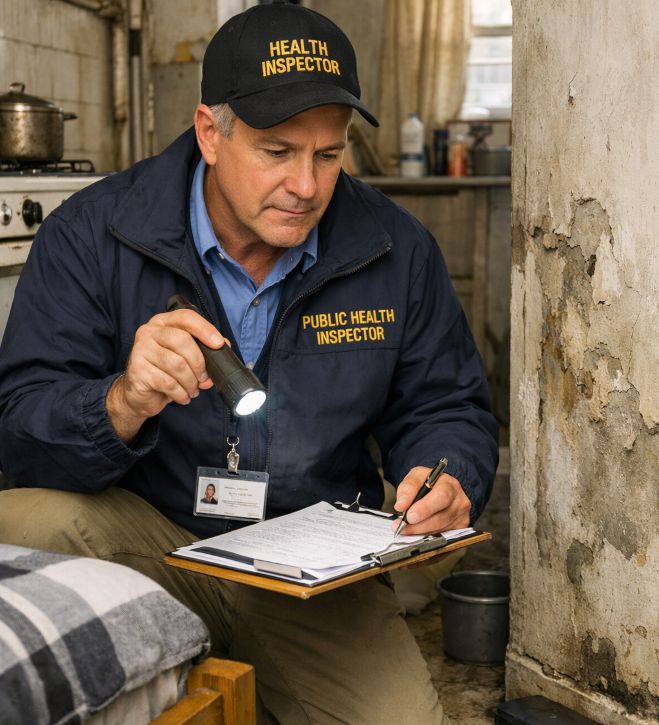
The World Health Organization (WHO) notes that housing conditions are among the strongest social determinants of health, influencing everything from respiratory illness to mental well-being. In dense urban settlements, where low-income families often face overcrowding and aging infrastructure, even small environmental problems can quickly escalate into public health concerns. Housing debates are therefore no longer just about rent and ownership, but about safety, dignity, and health protection.
Within this context, pest control has become a recurring issue in tenant disputes, especially in older apartment buildings. Practical guidance such as bed bug inspection and treatment reflects how infestations are no longer treated as isolated inconveniences but as systemic housing failures. The question that follows is whether responsibility lies primarily with landlords maintaining property standards or governments enforcing broader housing and health protections.
The Debate: Landlord Accountability Versus Government Oversight
From one perspective, landlords are the immediate custodians of housing quality. They are expected to ensure that rental units remain habitable, structurally safe, and free from infestations. Tenant advocacy groups argue that failing to address pest problems such as bed bugs constitutes negligence, especially when rent is collected at market or subsidized rates. Regular pest control inspections, timely repairs, and coordinated extermination efforts are often cited as basic obligations of property ownership.
On the other side of the debate, housing advocates emphasize that landlords operate within broader regulatory environments. In many low-income areas, property owners may lack financial incentives or enforcement pressure to maintain high standards. This is where government responsibility becomes central. Agencies such as the U.S. Department of Housing and Urban Development (HUD) stress that housing codes and inspection systems exist to ensure minimum living standards are met. Without consistent enforcement, accountability becomes uneven, and tenants bear the consequences.
Public Health Implications Beyond Infestation
Although bed bugs are not known to transmit diseases, their presence has significant health consequences. The U.S. Centers for Disease Control and Prevention (CDC) highlights that infestations can lead to sleep disruption, anxiety, and secondary skin infections caused by excessive scratching. These outcomes are particularly severe in communities where access to healthcare is limited or delayed.
Public health experts also note that infestations tend to cluster in densely populated housing units, making containment difficult without coordinated action. What begins as a localized issue can spread across multiple apartments, schools, and shelters. In this sense, pest management becomes part of broader environmental health policy rather than a private maintenance issue. Preventive measures such as routine pest inspections, tenant education, and integrated pest management strategies are increasingly seen as essential tools in urban health planning.
Community Impact and Social Inequality
The burden of housing-related health issues is not evenly distributed. Low-income families are more likely to live in older buildings with structural vulnerabilities, increasing exposure to pests and environmental hazards. When infestations occur, the social consequences extend beyond physical discomfort. Families may face stigma, temporary displacement, or financial strain from replacing furniture and belongings.
Schools and childcare centers in affected neighborhoods also experience indirect effects. Children dealing with sleep deprivation or skin irritation may struggle to concentrate, affecting educational outcomes. Community organizations often step in to provide relief, but their resources are limited compared to the scale of need. These challenges underscore how housing conditions can reinforce cycles of inequality, where environmental stressors translate into long-term social disadvantages.
Policy Considerations and Competing Approaches
Policy responses to housing-related health risks vary widely. Some jurisdictions adopt strict landlord accountability frameworks, requiring documented pest control interventions and periodic inspections. Others rely more heavily on tenant reporting systems, which can delay response times and reduce effectiveness. A growing number of urban policy analysts advocate for hybrid models that combine enforcement with prevention.
Research from urban health studies suggests that proactive inspection programs reduce recurrence rates of infestations when paired with tenant education and financial support for landlords to maintain standards. However, implementation remains uneven. Budget constraints, administrative inefficiencies, and limited public awareness often weaken enforcement. In many cases, policies exist on paper but lack the operational capacity to deliver consistent results.
Another emerging approach involves integrating housing policy with public health systems. Instead of treating infestations purely as property violations, some cities are developing cross-agency response teams that include health inspectors, housing officers, and community outreach workers. This reflects a shift toward recognizing housing as a foundational element of health infrastructure rather than a separate policy domain. These governance tensions mirror broader systemic realities, as explored in discussions on how healthcare pressures shape political decision-making, where public health needs often force governments to reconsider traditional policy boundaries and budget priorities.
Conclusion: Rethinking Responsibility in Shared Spaces
The debate over housing responsibility reveals a deeper question about how societies define public health obligations in private living spaces. Landlords hold immediate responsibility for property conditions, yet governments shape the systems that enforce those standards. When both levels of accountability fail to align, low-income communities often experience the greatest harm.
Effective solutions require moving beyond reactive responses toward preventive frameworks that include routine pest monitoring, stronger housing codes, and accessible reporting systems. Integrated approaches that combine inspection services, tenant support, and regulatory enforcement offer a more balanced path forward.
Ultimately, housing is not just a market commodity but a determinant of public health. Addressing issues such as pest infestations through coordinated pest control checks, environmental safety programs, and community-level support strengthens both individual well-being and collective resilience. The way societies manage these challenges reflects not only policy priorities but also the value placed on dignity in everyday living conditions.